
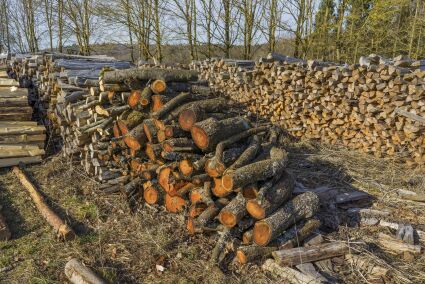
Firewood is the only fuel a wood-burning stove needs. The wood you choose — and the way you dry and store it — directly determines the quality of the fire, the efficiency of the appliance, and the cleanliness of your flue. Here is what you need to know.
Before choosing a species, understand one essential rule: firewood must have a moisture content below 20%. This is not a guideline — it is a condition for proper combustion.
Wet wood burns poorly. A large share of its energy is consumed simply evaporating the water it contains before combustion can begin. The signs are visible: weak flames, excessive smoke, a blackened glass door, rapid build-up in the stove and flue. Freshly cut wood can contain up to 75% water in its outer layers. Allow two full years of drying time to reach the required level.
A moisture meter is the most reliable tool to check readiness. Without one, a well-seasoned log feels light and produces a clear, ringing sound when struck against another.
Seasoning does not happen on its own. Three conditions are required.
Logs must be split. A whole round dries very slowly; split, it exposes its surface to air and seasons in half the time.
Wood must be sheltered from rain, but exposed to airflow. An open-sided shelter is ideal. A sealed tarpaulin traps moisture and encourages mould.
Logs must be kept off the ground. Contact with soil draws in moisture. Simple pallets or timber bearers are sufficient.
Hardwoods deliver the best results: steady flames, long-lasting embers and consistent heat output.
Beech and ash are the reference choices. They season quickly, are widely available and ignite easily. One important note: they must be sheltered immediately after cutting, as they deteriorate rapidly in the open air.
Oak is an excellent fuel, but demands patience. Unlike other species, it should be left uncovered for two years first — rain draws out the tannins it contains. A further one to two years under cover are then sufficient. Oak burns slowly and steadily, producing long-lasting embers. It is particularly well suited to overnight burning.
Hornbeam, cherry and fruit woods are outstanding fuels. Their fire is calm and even, their embers lasting. Less common, but well worth using when available.
Birch, lime, poplar and black locust burn quickly and produce attractive flames, but their heat output is lower. Use them to start or revive a fire, not to heat a room over time. Two points to note: poplar produces abundant, airborne ash; black locust throws sparks.
Softwoods generate heat but burn very fast. Their resin deposits in the flue over time. Avoid them for regular use.
Chemically treated wood, railway sleepers and manufactured board products must never be used as fuel. They release toxic fumes and cause rapid, costly damage to the appliance and flue.
Good firewood is hard, well-seasoned and untreated. Oak, beech, ash, hornbeam and fruit woods are the best choices. They allow your stove to operate at its full efficiency — meaning lower consumption, fewer emissions, and a more enjoyable fire.
For advice on the firewood best suited to your specific installation, your authorised Stûv dealer is the right person to consult.