
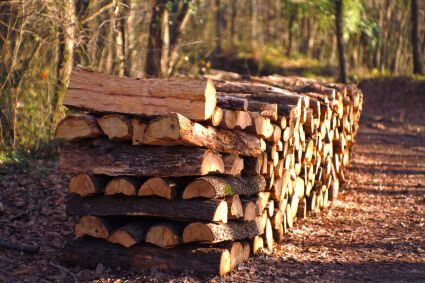
A wood-burning stove is only as good as the fuel it burns. Even the best species of wood will perform poorly if it has been stored incorrectly. Here are the essential rules for storing and seasoning firewood properly — and why it matters more than most people realise.
Freshly cut wood contains between 40 and 50% moisture. To burn correctly in a wood-burning stove or fireplace insert, that moisture content must fall below 20%. Above this threshold, a large proportion of the heat produced by combustion is consumed evaporating the water inside the log — rather than warming your home.
The consequences accumulate over time: a blackened glass panel, fires that are difficult to sustain, creosote build-up in the flue, and accelerated fouling of the appliance. In the long run, consistently burning wet wood can damage both the stove and the chimney.
Proper storage is not a constraint. It is the condition for a fire that actually works.
This is the most common question — and the answer depends on the species.
Softer hardwoods such as ash and birch season in 12 to 18 months under good conditions. Denser hardwoods like oak require 2 to 3 years. As a general rule, allow two full years for most common species.
Seasoning cannot be reliably assessed by eye alone. A moisture meter — available at any hardware store — is the most accurate tool. Without one, look for these signs: well-seasoned logs are noticeably lighter than green wood, show visible cracks at the end grain, and produce a clear, ringing sound when struck against another log. A dull thud indicates moisture is still present.
Split the logs before storing. A whole round dries very slowly because the bark acts as a barrier to evaporation. Split wood exposes its internal surface to the air and seasons in roughly half the time. This is the single most important step — and the most frequently skipped.
Keep the wood off the ground. Direct contact with soil or concrete draws moisture upward through capillary action. Simple pallets, timber bearers or a basic wooden frame provide sufficient elevation. Ten centimetres of clearance is enough.
Cover the top, leave the sides open. This is the point most often misunderstood. A sealed tarpaulin draped over the entire pile traps moisture, encourages condensation and promotes mould. Rain falls from above — protect the top. Air moves from the sides — keep them open. A log store with a sloped roof and open sides is the ideal solution.
Keep the wood away from walls. Leaving 10 to 15 centimetres between the logs and any wall or fence prevents surface condensation and allows air to circulate on all faces of the pile.
Orientation matters. A south-facing stack receives maximum sunlight, which accelerates evaporation. Prevailing winds also contribute to drying — a slightly open position is preferable to a sheltered corner.
Conversely, an enclosed cellar or unventilated garage is not suitable for the seasoning phase. Stagnant ambient humidity slows the process considerably. These spaces may be appropriate for short-term storage of already-dry wood — not for seasoning green wood.
A firewood store works best when managed like a wine cellar: oldest stock at the front, newest at the back. Always burning what has been stored longest ensures the wood going into the stove is the driest available.
The ideal time to build up a stock is spring or early summer, when drying conditions are favourable and demand is lower. Waiting until autumn risks burning wood that is still too wet in the first weeks of the heating season.
Bringing a few logs inside — near the stove or in a log holder — is good practice, provided it is understood as a finishing step rather than a primary storage solution. The ambient warmth removes the last traces of surface moisture and makes ignition easier. A few days indoors is sufficient.
This indoor reserve also has a dimension that Stûv has always integrated into its designs: firewood is part of the hearth. Well presented, it contributes to the atmosphere of the room just as much as the appliance itself.
Good firewood storage rests on four simple principles: split wood, elevated off the ground, covered on top and open to the air on the sides. Follow them, and your wood will reach the required moisture content in time — allowing your appliance to operate at its full efficiency, with lower fuel consumption and less maintenance.
For advice on the storage solution best suited to your installation and available space, your authorised Stûv dealer is the right person to consult.