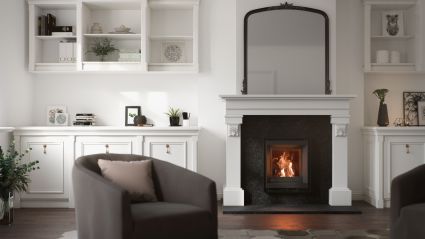
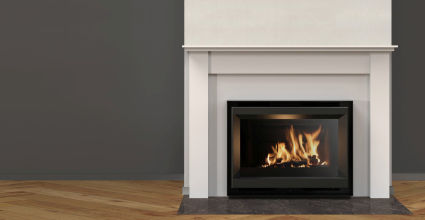
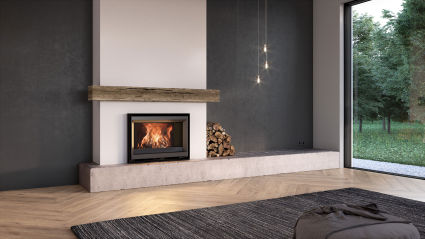
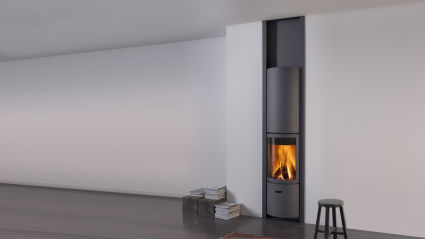
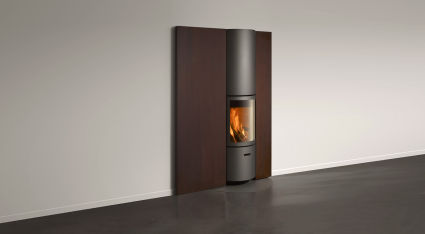
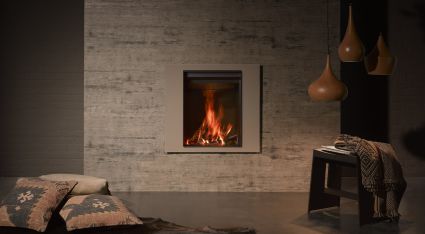
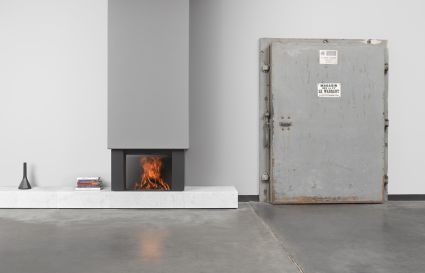
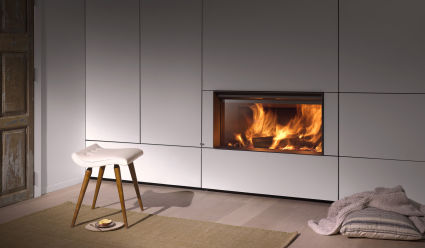
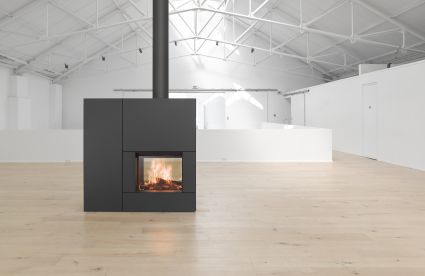
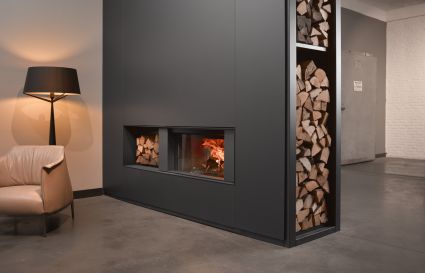
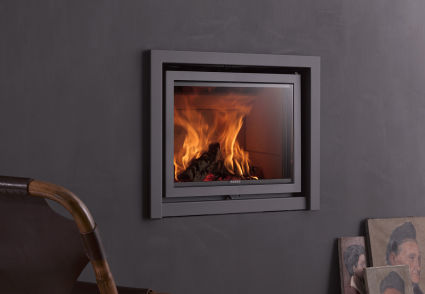
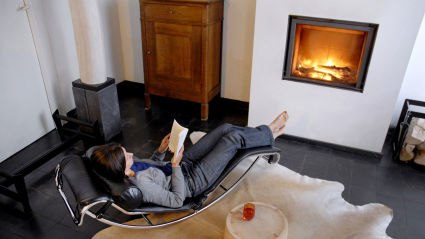
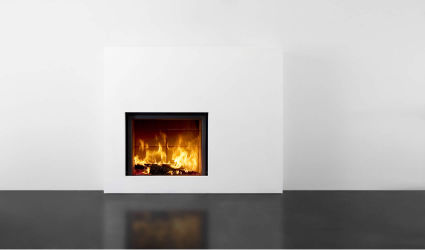
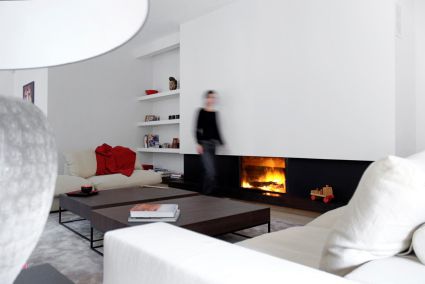
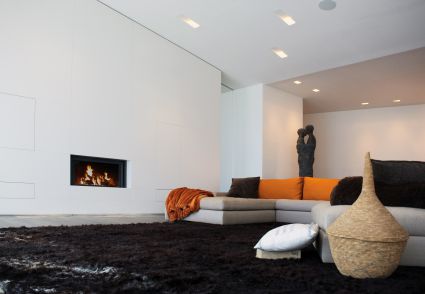
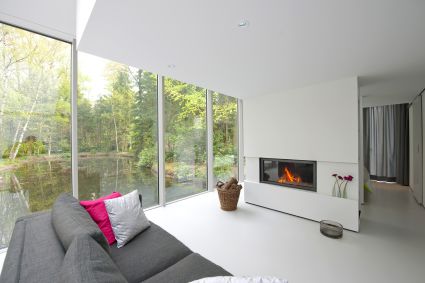
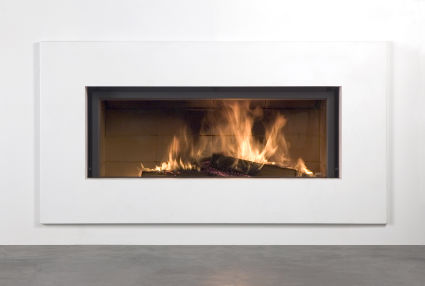
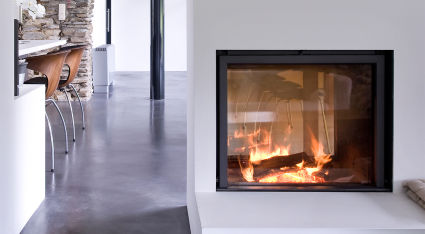
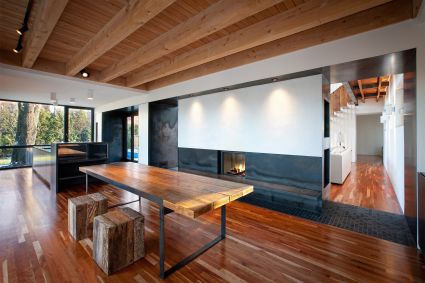
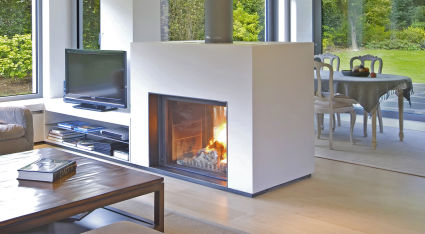
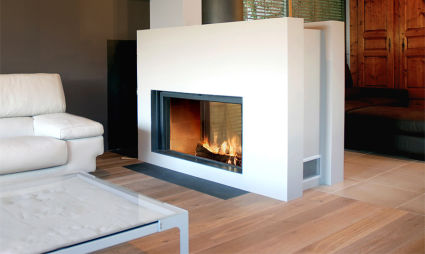
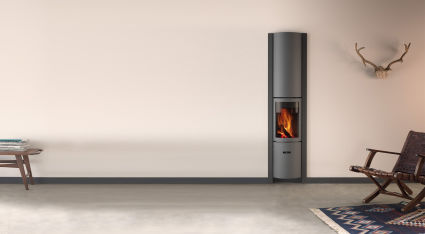
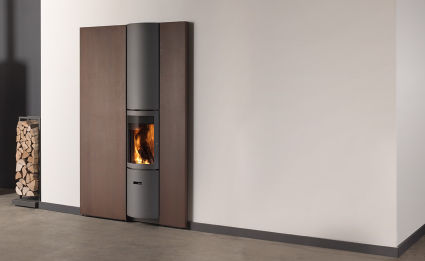
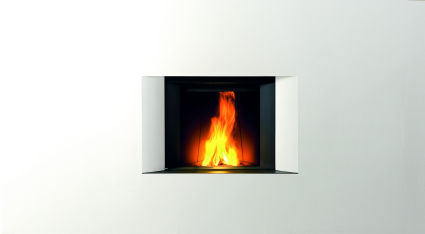
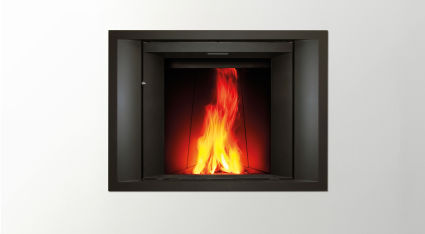
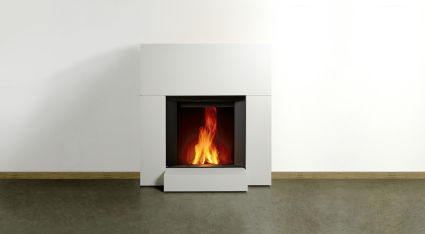
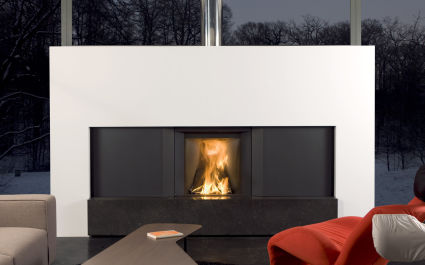
Stûv wood-burning inserts are designed and manufactured in Belgium, at the heart of Europe — a deliberate choice, driven by a commitment to quality. High efficiency, refined proportions, robust construction and precise finishing materials: products that combine design and performance. That is what defines Stûv.
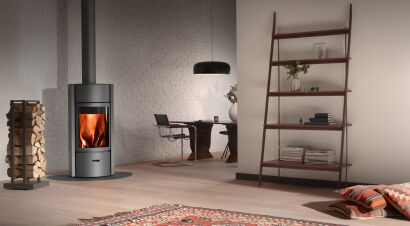
Stûv wood-burning inserts run exclusively on wood, not coal. No electricity is required (*). For optimal efficiency, the wood must be dry (maximum 20% moisture content, which requires proper seasoning and airing). Use hardwoods such as oak, beech, ash, hornbeam or fruit trees: they burn slowly and last longer. Avoid softwoods such as pine, which burn too quickly and cause creosote build-up in the flue. Dry wood in a Stûv guarantees efficient, low-impact heating. Wood combustion is CO2-neutral, and Stûv's engineering ensures minimal emissions, well below the most demanding environmental standards.
(* When using the optional fan.)
Wood needs air to burn, on average 8 m3 per kilogram.
That air can be drawn from two sources:
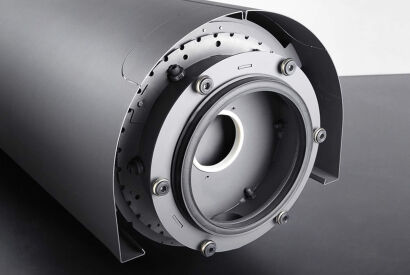
Heat is produced by both radiation and convection. Radiant heat comes from the flames, the glass and the throat. The sensation is similar to sitting in sunlight. Convection heats the room air: the insert draws cool air in through its base, transfers heat across an exchanger, and the warmed air rises naturally into the room. Room temperature can increase by several degrees, first close to the fireplace, then gradually throughout the space.
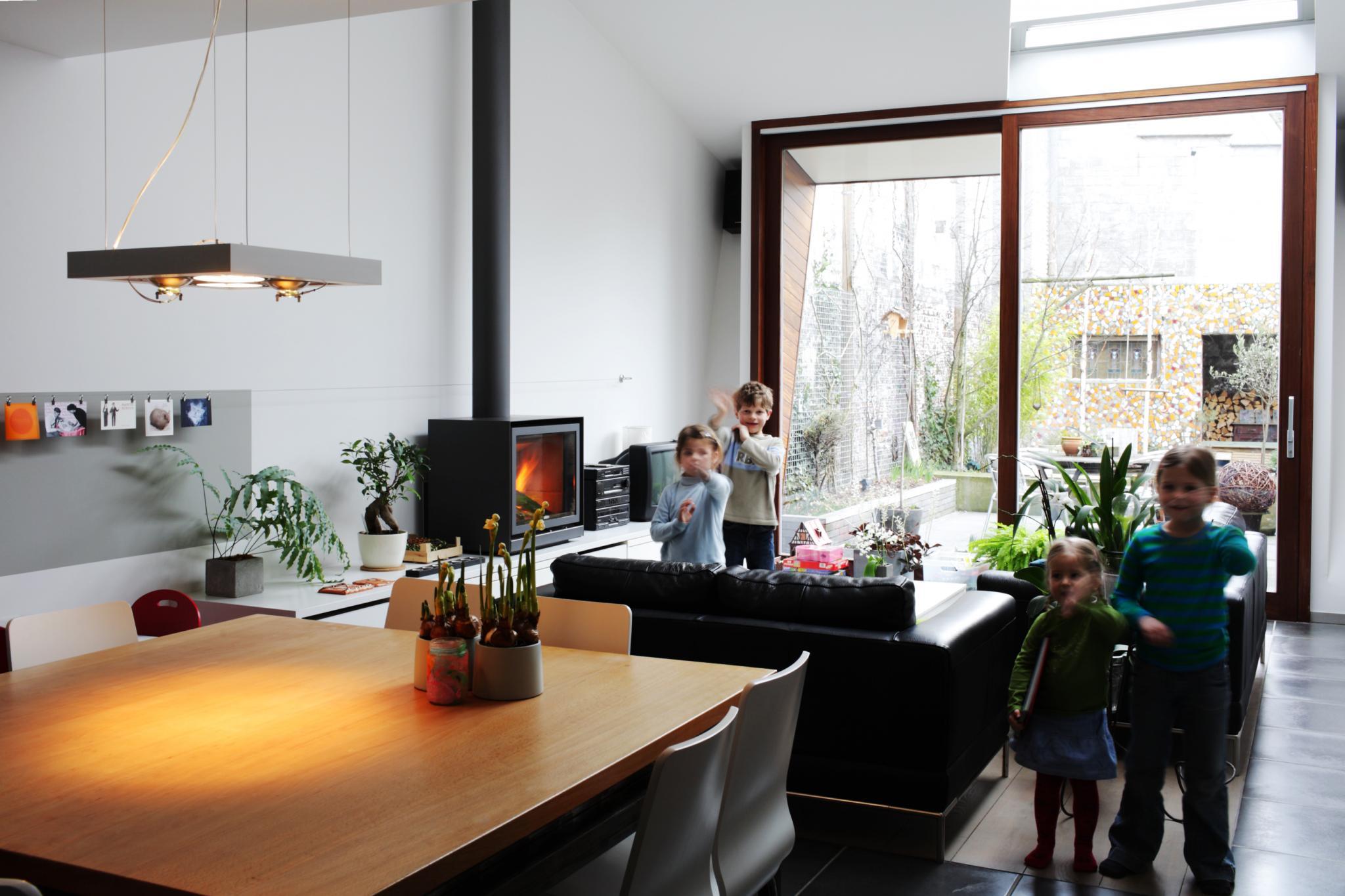
Combustion produces flue gases, primarily CO2, leaving the unit at over 250°C. These gases must be extracted through a flue that draws them naturally outside the building. The ideal flue is vertical, sufficiently tall, thermally insulated and fitted with a cap. It has a round cross-section of the appropriate diameter, with a smooth inner wall. The flue run up to roof level should ideally be inside the building to avoid cooling by external air. Where this is not possible, the external section must always be insulated. Bends are acceptable but preferably located in the lower section. The flue must maintain the required gradient throughout. Consult your approved installer: they will size the flue correctly and ensure reliable operation under all weather conditions.
For day-to-day comfort, choose a model whose output range matches your heating requirements. Stûv inserts are highly efficient, and the heat they generate is not comparable to that of a traditional open fire. The Stûv design allows output to be reduced by slowing the combustion rate, but the fire will still produce several kilowatts.
Match the heating output of the insert as closely as possible to the space to be heated and the building's insulation level. Start by calculating the heat requirement in kilowatts (kW). The power you need depends on the intended use: primary or supplementary heating.
Wood is a renewable energy source available in abundance: thanks to sustainable forest management, woodland coverage across European countries continues to grow.
Wood energy has a neutral greenhouse gas balance: when wood burns, the CO2 released is equivalent to the CO2 the tree absorbed during its lifetime. Due to their outstanding combustion quality, Stûv wood-burning inserts produce significantly less carbon monoxide (CO) and particulate matter than the thresholds set by the most stringent environmental regulations.
This level of performance is maintained over time. Despite prolonged exposure to very high temperatures, Stûv inserts do not warp and retain their airtight seal.
1. How you light the fire matters for the entire heating cycle.
We recommend the inverted lighting technique, also known as "top-down" firing. Light the fire from the top to pre-heat the flue and establish a draw. Place a sufficient load of dry hardwood on a bed of ash, then add kindling and a firelighter on top. Run at full output for half an hour without reloading. This method is straightforward, economical and low-emission: it promotes a stronger draw, reduces the risk of backdraught and cuts pollutant output by generating less smoke. The glass stays cleaner for longer.
2. When to reload?
For the best efficiency from your Stûv insert, keep it running in the upper part of its output range — a lively fire, with logs that span the full width of the firebox floor.
3. Open or closed fire?
Inserts with a retractable glass panel give you the choice. Open-fire mode delivers intense radiant warmth but is less efficient than closed mode. The same quantity of wood burned as an open fire will heat the room five to six times less effectively. Open use also requires more air, which is inevitably drawn from the room itself — requiring a vent or window to be partially opened. Open fire is undoubtedly the most convivial mode, but Stûv inserts are primarily designed for closed operation: greater efficiency, optimised combustion.
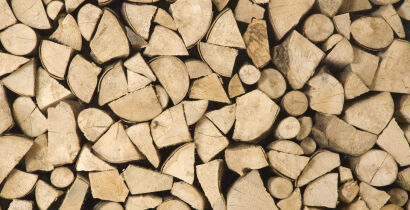
Your Stûv becomes part of your home and is built to last as long as the structure of the building. The entire installation must be maintained: the insert, the flue, the chimney surround and the air supply.
Cleaning the glass: because Stûv's combustion quality is so high, the glass will stay relatively clean when dry wood is used. Occasionally, a thin layer of residue can be removed with 000-grade steel wool or a cloth. Avoid abrasive or corrosive products. The glass will be as clear as the day it was installed.
Emptying the ash: wait until the firebox cannot hold any more ash before emptying it. Ash actually helps the fire light. Some Stûv models have a removable ash drawer with a mechanism to drop ash into it, a practical solution.
Once a year, inspect the condition of the seals and moving parts (latches, hinges, dampers, bearings). If a part needs replacing, spares are available through your installer and can be replaced without removing the decorative surround.
Flue sweeping: Stûv recommends sweeping the flue at least once a year (check the regulations applicable in your country or region).
Air supply: if external air is supplied via a duct, check that it is not obstructed and that there is no condensation build-up. A damper is advisable to close off the air supply when the insert is not in use.
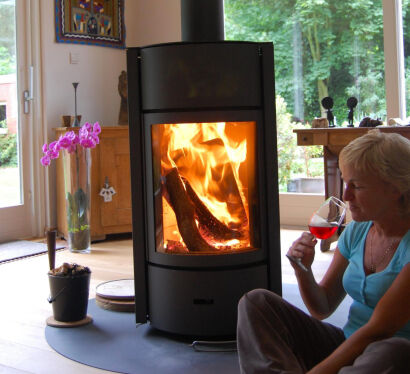
Both units are built into an existing fireplace or a masonry recess. The difference lies in the fuel, and in what that means for everyday use.
The wood-burning insert requires active involvement: loading the logs, adjusting the air supply, managing the ash. It also involves a particular relationship with fire that many people value for its hands-on, tactile quality.
The pellet insert takes care of itself. The fuel feed is automatic, ignition is electronic, and temperature is controlled via a smartphone app. It runs for several hours without attention and can be programmed remotely.
Stûv also offers the sP20-in, a built-in pellet insert. It fits directly into an existing s30-in recess without any modification. For any other insert replacement project, it is worth exploring with your installer, wide fire view, automatic pellet feed.

Quality guarantee: Stûv wood-burning inserts are designed and manufactured in Belgium.
Performance guarantee: Stûv wood-burning inserts are certified with emission levels well below the limits for particulate matter and carbon monoxide. Emission thresholds are clearly below the directives for clean combustion, and efficiency exceeds all applicable requirements.

Design guarantee: Stûv designs products where form follows function, with customisable aesthetics and a patented technique for applying the finishing material as close as possible to the fire.
After-sales service: Stûv has a network of approved dealers who handle after-sales support. Stûv guarantees spare parts availability for 10 years. For all these reasons, Stûv offers a free extended warranty.